

Expat Rentals Amsterdam — Furnished Apartments for International Professionals available for 2+ months
James Evans • Mon, Jun 1, 2026
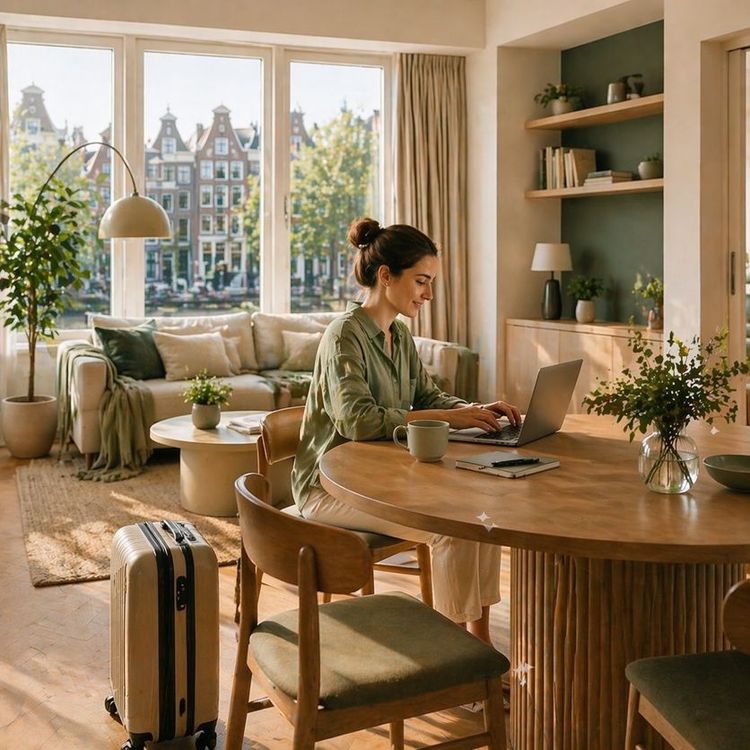
Fully furnished apartments for expats relocating to Amsterdam. Flexible contracts, BSN registration support, and all utilities included — everything you need to settle in quickly.
Expat Rentals in Amsterdam: Why the Standard Market Doesn't Work
Amsterdam's private rental market is built around Dutch residents. Landlords typically demand a minimum 12-month contract, Dutch payslips, and a salary of at least three times the monthly rent. For expats arriving on a project contract, a relocation package, or ahead of their employment start date, that's effectively a closed door.
City Retreat exists precisely for this gap. Our apartments are designed for international professionals — fully furnished, all-inclusive, available quickly, and without the requirements that make the private market inaccessible to expats.
BSN Registration
Register your Amsterdam address from day one — essential for your bank account, healthcare, and employer payroll.
Move-In Ready
Fully furnished with kitchen equipment, linen, and towels. Arrive with your suitcase — everything else is done.
All Utilities Included
Gas, electricity, water, and high-speed Wi-Fi — all in one monthly figure. No Dutch utility accounts to set up.
Flexible Contracts
No fixed end date. Just one calendar month's notice to leave. Contracts adapt when your plans change.
No Dutch Payslips Required
We don't require Dutch employment contracts or income multiples — the barriers that block most expats from private rentals.
Local Support Team
Our Amsterdam-based team handles maintenance, questions, and any issues throughout your stay — in English.
Finding an Expat Rental in Amsterdam: What Are Your Choices?
Most expats arriving in Amsterdam face the same three options — private rental, hotel, or a serviced apartment provider. Here's how they compare for someone relocating internationally.
| What you need | Private Rental | Hotel / Airbnb | City Retreat |
|---|---|---|---|
| BSN / address registration | ✓ | ✗ | ✓ |
| No Dutch employment contract | ✗ | ✓ | ✓ |
| Flexible term — under 12 months | ✗ | Short only | ✓ |
| All bills included | ✗ | ✓ | ✓ |
| Fully furnished on arrival | Rarely | ✓ | ✓ |
| Real apartment — not a hotel room | ✓ | ✗ | ✓ |
| Available within days | ✗ | ✓ | ✓ |
| Cost-effective for 2+ months | ✓ | ✗ | ✓ |
Your BSN (Burgerservicenummer) is the key to life in the Netherlands. Without it you can't open a Dutch bank account, access healthcare, or complete payroll registration with your employer. You can only obtain a BSN by registering at a valid residential address — something hotels and Airbnbs cannot provide. City Retreat apartments support municipality registration from your first day of tenancy. Read our full BSN registration guide for expats.
Your First Month in Amsterdam: A Practical Checklist
Beyond finding an apartment, the first few weeks in Amsterdam involve a series of practical steps. Here's what to do and when — with links to our guides where we've covered each topic in detail.
-
Register your address with the municipality Book an appointment at the Gemeente Amsterdam to register your City Retreat address and start your BSN application. Aim to do this in your first week. Full registration guide →
-
Open a Dutch bank account Your BSN is required for most Dutch banks. Bunq and Revolut are often the fastest options for expats — both allow registration without a Dutch bank account history.
-
Register with a GP (huisarts) Dutch healthcare is GP-led — you need to register with a local doctor to access the system. Most practices accept new registrations within a few weeks. Healthcare guide for expats →
-
Arrange health insurance Basic health insurance (basisverzekering) is mandatory in the Netherlands within 4 months of registering. Premiums are around €130–160/month depending on the provider.
-
Understand your residential bills All utilities are included in your City Retreat rent — but you may still receive municipality tax bills for waste and water. Guide to Amsterdam residential bills →
-
Get around the city Amsterdam's GVB network covers trams, buses, metro, and ferries. An OV-chipkaart is the easiest way to pay. Most expats add a bike within the first week. Getting around Amsterdam guide →
-
File your Dutch tax return As a Netherlands resident, you'll need to file an annual tax return. The 30% ruling may apply if you relocated from abroad. Dutch tax guide for expats →
How Much Does an Expat Rental in Amsterdam Cost?
City Retreat rates are fully all-inclusive — one monthly figure covering rent, utilities, Wi-Fi, furnishings, and linen. No separate bills, no setup costs, no end-of-tenancy surprises.
Electricity, water, gas, high-speed Wi-Fi, fully furnished interiors, kitchen equipment, bed linen and towels, professional deep-clean before arrival, and ongoing maintenance support. The figure you agree is the figure you pay — every month.
How to Rent an Apartment in Amsterdam as an Expat
Most tenants go from first enquiry to confirmed booking within a few days. Here's how the process works.
Browse Available Properties
Search our live availability by move-in date, duration, and number of bedrooms. Every listing shows photos, floor plans, and exactly what's included — no surprises.
Talk to Our Team
We know the portfolio inside out. Tell us your situation — move-in date, how long you need, any specific requirements — and we'll match you to the right apartment. No sales pressure.
Sign Your Contract
A straightforward tenancy agreement — flexible start date, clear terms, no hidden clauses. We'll walk you through anything that needs explaining.
Move In
We meet you at the apartment for a full handover. Keys, walk-through, neighbourhood tips. You're settled and comfortable from day one.
Register Your Address & Get Your BSN
We support your municipality registration from the start of your tenancy, so you can obtain your BSN and get on with building your life in Amsterdam.
Trusted by International Professionals Since 2012
We've housed expats from over 50 countries — from solo professionals on short assignments to families making a longer-term move. Here's what a few of them had to say.
I arrived not speaking any Dutch, with no bank account and no idea how to navigate registration. City Retreat walked me through everything. By week two I had my BSN sorted. I can't recommend them highly enough.
Moving to Amsterdam for a six-month project felt daunting, but City Retreat made it genuinely easy. The apartment was exactly as described and any questions were answered the same day.
The Canal Ring apartment was beautiful — genuinely felt like my own place rather than a serviced room. Having utilities and Wi-Fi included made budgeting for a three-month stay very straightforward.
We relocated as a family and needed somewhere immediately while we figured out a longer-term plan. City Retreat had us in a great apartment within days. Professional, responsive, and genuinely helpful.
Frequently Asked Questions
No. Unlike private landlords in Amsterdam, we don't require Dutch payslips or a minimum salary multiple. This makes us well-suited for expats arriving ahead of their start date, on international contracts, or between roles.
Yes. City Retreat operates registered serviced accommodation, which means you can register your address with the Gemeente Amsterdam from the start of your tenancy. This is the first step to obtaining your BSN — and everything else that depends on it.
Our contracts start from 2 months with no fixed end date — just one calendar month's notice when you want to leave. If your plans extend or change, the contract simply adapts. We don't lock expats into terms that no longer fit their situation.
Everything you need to live: electricity, water, gas, high-speed Wi-Fi, fully furnished interiors with kitchen equipment, fresh linen and towels, and a professional deep-clean before your arrival. There are no hidden extras — the monthly figure you agree is what you pay.
Often within a few days of confirming your booking, subject to availability. If you're arriving at short notice, tell us and we'll prioritise finding you something as quickly as possible.
We provide detailed photos and floor plans for every listing. For expats arriving from abroad, we can arrange video walkthroughs on request. Our team is happy to answer specific questions about any apartment before you commit.
Yes. We have apartments ranging from one bedroom up to four bedrooms across multiple Amsterdam neighbourhoods. Our larger apartments are well-suited to families relocating together, and our team can advise on which areas work best depending on schools, commute, and lifestyle preferences.
Ready to Find Your Amsterdam Apartment?
Browse current availability or get in touch — our team knows the portfolio inside out and can match you to the right apartment for your situation.
View Available Apartments